





Jeebly | Logistics Solutions

reduce delivery cost in the UAE

How UAE businesses cut delivery costs by 30% — real results & strategies

UAE businesses are reducing delivery costs by 20–30% through three main strategies: route optimisation, reducing failed deliveries through better address data, and consolidating shipments with a third-party logistics provider.

The Challenge

Our client, a growing ecommerce retailer, faced rising delivery costs due to:

•    Inefficient routing that increased fuel and labor expenses
•    Lack of real-time tracking, which led to delivery delays and re-attempts
•    Fluctuating order volumes during peak seasons, causing higher operational overheads
•    Limited visibility into performance metrics, making optimization difficult

The business needed a logistics partner capable of offering scalable, cost-efficient solutions to keep up with growth.

The Jeebly Approach

At Jeebly, we believe that cost optimization is about building smarter systems, not cutting corners. For this client, our strategy combined technology, operational efficiency, and customer-focused solutions to significantly reduce delivery cost in the UAE.

1. Route Optimization

Using advanced algorithms, and predictive analytics, the logistics team at Jeebly Jeebly minimized unnecessary mileage, reduced fuel usage, and ensured faster deliveries. This directly lowered per-delivery costs for the client.

2. Flexible Delivery Models

Instead of a one-size-fits-all solution, we provided both same-day delivery in Dubai and next-day delivery across the UAE. This flexibility gave the client cost-effective options depending on the urgency of orders. For really urgent orders, within Dubai, we also have the express delivery service, wherein orders are delivered within 1-2 hours.

3. Tracking & Visibility

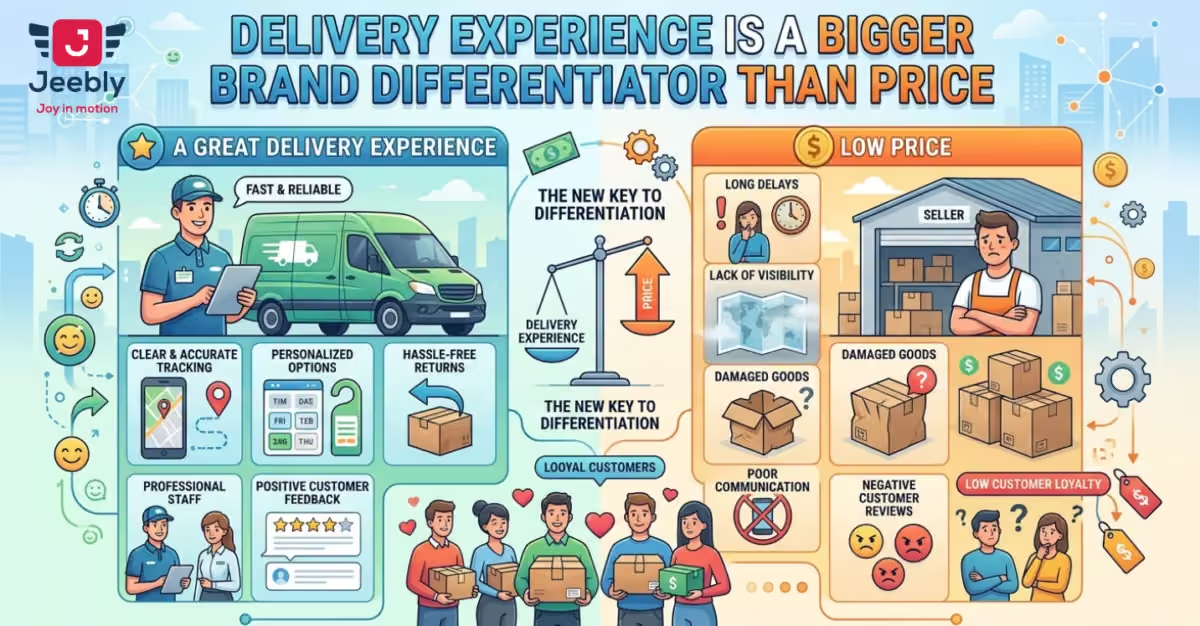
Our technology allowed both the client and their customers to track orders, by getting regular updates on the Jeebly NoW app as well as on the website.. This reduced failed delivery attempts, saving money and improving customer satisfaction.

4. Scalable Workforce & Rider Excellence

By leveraging our trained rider network and Rider Excellence Center, the client had access to scalable manpower during peak times—without maintaining high fixed costs year-round.

5. Data-Driven Insights

Jeebly’s analytics tools provided the client with performance metrics such as delivery success rate, average delivery time, and cost per shipment. These insights helped fine-tune operations for further cost reductions. All the data is visible to the client on the user dashboard.
The client can even access historical data and prepare for times such as peak season according to past data.

The Results

Within just three months of partnering with Jeebly, the client experienced measurable success:

•    22% reduction in overall delivery costs
•    Fewer failed deliveries, leading to higher customer satisfaction
•    Improved average delivery time, strengthening brand reputation
•    More predictable costs, enabling better financial planning

This case demonstrates how Jeebly helps businesses reduce delivery cost in the UAE while simultaneously boosting efficiency and customer loyalty.

Why It Matters ?

For SMEs and large enterprises alike, logistics is no longer just about moving goods—it’s about enabling growth. High delivery costs can restrict scalability, but with the right partner, businesses can unlock savings while delivering a better experience.

At Jeebly, we’re committed to building logistics systems that empower businesses. By combining innovation with reliability, we ensure every client gets cost savings without compromising service quality.

Final Thoughts

If you’re looking to reduce delivery cost in the UAE, Jeebly is the partner to trust. Our case studies prove that with the right technology, flexible delivery options, and customer-first approach, logistics can shift from being an expense to becoming a growth driver.

Frequently Asked Questions

The amount a business can save depends on shipment volume, delivery frequency, routing efficiency, and operational processes. Many businesses reduce delivery costs by consolidating shipments, optimizing routes, reducing failed deliveries, and partnering with logistics providers that offer scalable pricing and technology-driven operations.

Last-mile delivery is often the most expensive stage of the logistics journey because it involves transporting individual orders directly to customers. Costs are driven by factors such as fuel, driver time, traffic congestion, failed delivery attempts, route inefficiencies, and the need to meet customer delivery expectations.

Route optimization tools reduce costs by identifying the most efficient delivery routes based on distance, traffic conditions, delivery windows, and order density. This helps businesses lower fuel consumption, reduce driver hours, improve vehicle utilization, and complete more deliveries within the same operational timeframe.

Businesses can reduce failed deliveries by collecting accurate address information, confirming customer details before dispatch, providing real-time tracking updates, and maintaining clear communication throughout the delivery process. Flexible delivery scheduling and proof-of-delivery systems can also improve first-attempt delivery success rates.

For many businesses, partnering with a third-party logistics (3PL) provider can be more cost-effective than operating an in-house delivery network. A 3PL can provide access to established infrastructure, delivery fleets, technology platforms, operational expertise, and economies of scale, helping businesses reduce overhead costs while improving delivery performance.

Routes to insightful reads

BNPL in the UAE and its impact on ecommerce delivery and returns, showing the transaction cycle, faster fulfilment, order frequency, real-time tracking, and streamlined returns
Buy Now Pay Later in the UAE: What BNPL Means for eCommerce Delivery and Returns.

Buy Now Pay Later (BNPL) is changing how consumers shop and how eCommerce businesses manage fulfilment and returns in the UAE. This guide explores how BNPL can influence order volumes, delivery demand, fulfilment operations, return rates, refund processing, and the logistics strategies businesses need to support a growing BNPL-driven customer base.

Read More
Infographic explaining how to calculate volumetric weight for shipping, including the formula, measurement example and comparison between actual and chargeable weight.
How to Calculate Volumetric Weight for Shipping: Formula and Examples

Learn how to calculate volumetric weight for shipping with an easy-to-follow formula and practical examples. Understand how package dimensions, actual weight and carrier conversion factors determine the chargeable weight and ultimately impact your shipping costs.

Read More
3PL vs 4PL logistics comparison showing warehousing, transportation, distribution, supply chain integration, technology, analytics, and strategic planning for UAE businesses
3PL vs 4PL: What Is the Difference and Which Does Your UAE Business Need?

3PL and 4PL logistics models help businesses manage different levels of supply chain operations. This guide explains the key differences between 3PL and 4PL providers, their roles, benefits, costs, and how UAE businesses can choose the right logistics model based on their size, supply chain complexity, and operational needs.

Read More
Types of packaging for courier shipments, showing outer packaging strength, void-fill options, cushioning materials, and sealing and labelling methods
Types of Packaging for Courier Shipments: Which One Best Protects Your Product?

Choosing the right packaging is essential for protecting products during courier transportation. This guide explores different types of packaging for courier shipments, including corrugated boxes, bubble wrap, air pillows, paper fillers, foam inserts, and protective seals, and explains how to choose the best option based on your product, handling needs, and shipping conditions.

Read More
Types of logistics explained through inbound, outbound, reverse and third-party logistics, showing the movement of goods between suppliers, warehouses, customers and return facilities.
Types of Logistics Explained: Inbound, Outbound, Reverse and Third-Party 

Logistics covers much more than moving goods from one place to another. This guide explains the four key types of logistics, inbound, outbound, reverse and third-party logistics (3PL), and how each supports the supply chain. Learn how goods move from suppliers to warehouses, reach customers, return for repair or disposal, and how businesses use 3PL providers to manage logistics operations.

Read More

    Powered by