






Jeebly | Logistics Solutions

How to Safely Move Fragile Items: Expert Packing Tips from Jeebly Moveo

How to Safely Move Fragile Items: Expert Packing Tips from Jeebly Moveo

Moving homes or offices can be stressful, especially when it comes to delicate and breakable items. From glassware and electronics to artwork and decor, fragile items require extra care and proper planning. Knowing how to safely move fragile items can make the difference between a smooth relocation and costly damage.

At Jeebly Moveo, we’ve handled thousands of relocations across the UAE. Here are our expert packing tips to help ensure your fragile belongings arrive safely at your new destination.

1. Use the Right Packing Materials

The foundation of safe packing starts with high-quality materials. Avoid using old or weak boxes for fragile items.

Essential packing supplies include:

1) Sturdy, double-walled boxes

2) Bubble wrap and foam sheets

3) Packing paper or soft padding

4) Strong packing tape

5) “Fragile” and “This Side Up” labels

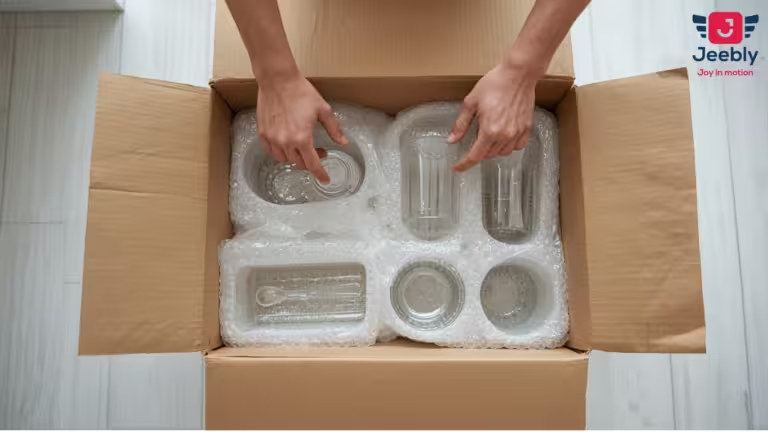
Each fragile item should be individually wrapped to prevent movement and impact during transit.

2. Pack Items Individually and Securely

One of the most common mistakes people make when packing fragile items for moving is stacking items without enough separation. Glass, ceramics, and electronics should never touch each other directly.

Wrap each item separately and place cushioning at the bottom, sides, and top of the box. Fill all empty spaces with padding to prevent shifting while the box is being moved.

3. Label Boxes Clearly

Clear labeling helps movers handle your boxes with care. Always mark fragile boxes visibly on multiple sides. Indicate the contents and the correct orientation of the box.

Proper labeling allows professional movers to prioritize fragile items during loading and unloading, reducing the risk of damage.

4. Don’t Overload Boxes

Heavy boxes increase the risk of drops and internal damage. Keep fragile item boxes light and manageable. If a box feels too heavy, split the items into multiple boxes.

Balancing weight is a simple yet effective way to ensure safe packing for relocation.

5. Protect Electronics and Valuables

For electronics, use original packaging whenever possible. If not available, wrap devices in anti static materials and add extra padding. Remove detachable parts and secure cables separately.

For high value or sentimental items, consider keeping them with you instead of placing them in the moving truck.

6. Trust Professional Movers for Expert Handling

Even with the best packing techniques, handling during transport plays a crucial role. Professional movers are trained to load, secure, and transport fragile items safely.

At Jeebly Moveo, our team uses industry-grade packing materials, expert handling techniques, and secure transportation to ensure your belongings are protected throughout the move.

Move with Confidence

Understanding how to safely move fragile items is essential for a stress-free relocation. With proper packing, clear labeling, and professional support, your delicate belongings can reach their destination intact.

Whether you’re moving a home or an office, Jeebly Moveo is here to help you relocate with reliability, safely, smoothly, and with complete peace of mind.

Routes to insightful reads

BNPL in the UAE and its impact on ecommerce delivery and returns, showing the transaction cycle, faster fulfilment, order frequency, real-time tracking, and streamlined returns
Buy Now Pay Later in the UAE: What BNPL Means for eCommerce Delivery and Returns.

Buy Now Pay Later (BNPL) is changing how consumers shop and how eCommerce businesses manage fulfilment and returns in the UAE. This guide explores how BNPL can influence order volumes, delivery demand, fulfilment operations, return rates, refund processing, and the logistics strategies businesses need to support a growing BNPL-driven customer base.

Read More
Infographic explaining how to calculate volumetric weight for shipping, including the formula, measurement example and comparison between actual and chargeable weight.
How to Calculate Volumetric Weight for Shipping: Formula and Examples

Learn how to calculate volumetric weight for shipping with an easy-to-follow formula and practical examples. Understand how package dimensions, actual weight and carrier conversion factors determine the chargeable weight and ultimately impact your shipping costs.

Read More
3PL vs 4PL logistics comparison showing warehousing, transportation, distribution, supply chain integration, technology, analytics, and strategic planning for UAE businesses
3PL vs 4PL: What Is the Difference and Which Does Your UAE Business Need?

3PL and 4PL logistics models help businesses manage different levels of supply chain operations. This guide explains the key differences between 3PL and 4PL providers, their roles, benefits, costs, and how UAE businesses can choose the right logistics model based on their size, supply chain complexity, and operational needs.

Read More
Types of packaging for courier shipments, showing outer packaging strength, void-fill options, cushioning materials, and sealing and labelling methods
Types of Packaging for Courier Shipments: Which One Best Protects Your Product?

Choosing the right packaging is essential for protecting products during courier transportation. This guide explores different types of packaging for courier shipments, including corrugated boxes, bubble wrap, air pillows, paper fillers, foam inserts, and protective seals, and explains how to choose the best option based on your product, handling needs, and shipping conditions.

Read More
Types of logistics explained through inbound, outbound, reverse and third-party logistics, showing the movement of goods between suppliers, warehouses, customers and return facilities.
Types of Logistics Explained: Inbound, Outbound, Reverse and Third-Party 

Logistics covers much more than moving goods from one place to another. This guide explains the four key types of logistics, inbound, outbound, reverse and third-party logistics (3PL), and how each supports the supply chain. Learn how goods move from suppliers to warehouses, reach customers, return for repair or disposal, and how businesses use 3PL providers to manage logistics operations.

Read More

    Powered by