





Jeebly | Logistics Solutions

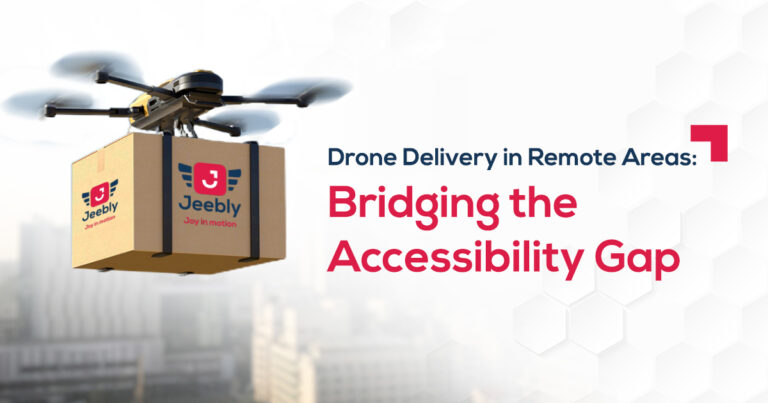
Drone Delivery in Remote Areas: Bridging the Accessibility Gap

Accessing remote areas has been a persistent challenge over the years. Poor roads, difficult terrain, and a lack of reliable transportation have kept these places isolated for generations. However, in recent years, a promising solution has emerged on the horizon – drone delivery.

Addressing Accessibility Challenges with Drone Delivery:

In remote areas, the absence of well-developed roads and limitations of traditional transportation create significant obstacles, resulting in delayed deliveries of essential goods and services. This scenario leaves communities underserved and grappling with hardships. The advent of drone technology emerges as a promising solution to bridge these accessibility gaps. Drones, with their ability to navigate challenging terrains efficiently, are becoming a powerful force for positive transformation. Their role in ensuring prompt and streamlined deliveries has the potential to revolutionize how essential services reach distant corners of the world, ushering in a new era of efficiency and accessibility.

Advantages of Drone Delivery:

The advantages of drone delivery in remote areas are manifold. The speed and agility of drones ensure timely access to crucial supplies, especially in emergency situations. Medical supplies, food, and other necessities can be transported swiftly, addressing the immediate needs of the population.

Impact on Healthcare:

In healthcare, the implications are profound. Drone deliveries facilitate quick dispatch of medical supplies, reducing response times during emergencies. Furthermore, the support for telemedicine through the delivery of diagnostic tools ensures that remote clinics have access to the resources necessary for providing quality healthcare services.

Economic and Societal Impacts:

Drone technology not only improves accessibility and timely delivery in remote areas but also reduces reliance on physical store visits and promotes fuel savings. By delivering goods directly to doorsteps, drones save time, effort, and transportation costs for residents. They operate efficiently, minimizing fuel consumption and carbon emissions compared to traditional delivery methods. This shift towards energy-efficient delivery mechanisms aligns with global sustainability goals, benefiting both current and future generations in remote communities.

Addressing Sustainability in Drone Delivery:

Moreover, drone delivery not only tackles accessibility challenges but also champions sustainability. With their smaller carbon footprint and energy-efficient design, drones offer an environmentally friendly alternative to traditional transportation methods. Embracing eco-friendly drone models and renewable energy sources further ensures that progress in remote accessibility aligns with global efforts towards a greener future.

Future Prospects and Innovations:

Looking ahead, the future of drone technology in remote deliveries holds exciting possibilities. Advancements in artificial intelligence integration and route optimization promise even more efficient and reliable services. Collaborations between tech companies, governments, and local communities are driving ongoing innovations that aim to further enhance the capabilities of drone delivery systems.

Call for Continued Innovation:

Drone delivery is not just a technological breakthrough but a transformative force that uplifts communities and connects them globally, overcoming remote accessibility challenges. As we celebrate drone technology’s strides, continued innovation and support are crucial to realizing its full potential in remote regions. Collaboration among governments, businesses, and communities is essential to make accessibility a reality for isolated areas.

In the professional realm, Jeebly sets the standard for efficient and reliable drone deliveries in remote regions. Leveraging cutting-edge technology, Jeebly drives innovation by adhering to regulatory standards and adopting a customer-centric approach. By striving to innovate with drone technology, we demonstrate our commitment to building a world that is more connected and equitable.

Routes to insightful reads

BNPL in the UAE and its impact on ecommerce delivery and returns, showing the transaction cycle, faster fulfilment, order frequency, real-time tracking, and streamlined returns
Buy Now Pay Later in the UAE: What BNPL Means for eCommerce Delivery and Returns.

Buy Now Pay Later (BNPL) is changing how consumers shop and how eCommerce businesses manage fulfilment and returns in the UAE. This guide explores how BNPL can influence order volumes, delivery demand, fulfilment operations, return rates, refund processing, and the logistics strategies businesses need to support a growing BNPL-driven customer base.

Read More
Infographic explaining how to calculate volumetric weight for shipping, including the formula, measurement example and comparison between actual and chargeable weight.
How to Calculate Volumetric Weight for Shipping: Formula and Examples

Learn how to calculate volumetric weight for shipping with an easy-to-follow formula and practical examples. Understand how package dimensions, actual weight and carrier conversion factors determine the chargeable weight and ultimately impact your shipping costs.

Read More
3PL vs 4PL logistics comparison showing warehousing, transportation, distribution, supply chain integration, technology, analytics, and strategic planning for UAE businesses
3PL vs 4PL: What Is the Difference and Which Does Your UAE Business Need?

3PL and 4PL logistics models help businesses manage different levels of supply chain operations. This guide explains the key differences between 3PL and 4PL providers, their roles, benefits, costs, and how UAE businesses can choose the right logistics model based on their size, supply chain complexity, and operational needs.

Read More
Types of packaging for courier shipments, showing outer packaging strength, void-fill options, cushioning materials, and sealing and labelling methods
Types of Packaging for Courier Shipments: Which One Best Protects Your Product?

Choosing the right packaging is essential for protecting products during courier transportation. This guide explores different types of packaging for courier shipments, including corrugated boxes, bubble wrap, air pillows, paper fillers, foam inserts, and protective seals, and explains how to choose the best option based on your product, handling needs, and shipping conditions.

Read More
Types of logistics explained through inbound, outbound, reverse and third-party logistics, showing the movement of goods between suppliers, warehouses, customers and return facilities.
Types of Logistics Explained: Inbound, Outbound, Reverse and Third-Party 

Logistics covers much more than moving goods from one place to another. This guide explains the four key types of logistics, inbound, outbound, reverse and third-party logistics (3PL), and how each supports the supply chain. Learn how goods move from suppliers to warehouses, reach customers, return for repair or disposal, and how businesses use 3PL providers to manage logistics operations.

Read More

    Powered by