





Menu
Menu
Social commerce in the UAE operates in a real-scale environment with established buyer behaviour and growing commercial stakes. The UAE social commerce market is projected to grow from $3.21 Bn in 2024 to $6.41 Bn by 2030.
That growth sits atop 99% smartphone penetration with over 10 million smartphone users. Customers are already on TikTok, Instagram, and WhatsApp. They are discovering products, evaluating brands, and completing purchases without ever leaving those platforms.
The front end of social commerce here is well established. What causes most businesses to stall is what happens after the order is placed.
This guide covers how the three dominant platforms actually drive commerce in 2026, where the operational gaps appear, and what businesses need in place to turn social commerce volume into a sustainable operation.
Three figures define how social commerce functions in the UAE, and each one has a direct operational implication.
115% social media penetration.
More accounts exist than people. Every demographic, UAE nationals, Arab expats, South Asian communities, Western professionals, is reachable through social platforms. Audience fragmentation is real, but the addressable base is effectively the entire population.
75% of UAE consumers trust influencer recommendations.
Product discovery for most buyers happens through people. The purchase decision is shaped before the customer reaches any product page. This means conversion begins in content.
50.5% use social platforms specifically to research brands.
Customers are not just passively scrolling. They are making pre-purchase evaluations of the same apps they socialise on. How does your brand show up on Instagram? How quickly does it respond on WhatsApp? How does it surface on TikTok?
All these directly determine whether a sale happens.
Because if you take all these numbers together, they confirm what most UAE sellers already sense: social commerce is no longer a supplementary channel. For a large and growing portion of businesses here, it is the primary one.
TikTok has over 118.5% penetration among UAE adults, reflecting how embedded the platform is in daily consumption. What makes it commercially distinct is the nature of its discovery mechanism.
On most platforms, customers search with intent. On TikTok, products surface before customers even realise they’re looking for them.
* A cooking video introduces a kitchen tool.
* A lifestyle clip features a skincare product.
* A styling video drives demand for an item that had zero search volume the day before.
The content itself is the commercial trigger, and that changes everything about how sellers need to operate.
TikTok Shop connects product catalogues directly to content. Products tagged in videos come with a price and a purchase link. Live sessions allow pinned products to be purchased in real time.
The distance between discovery and transaction has been significantly reduced, which is both a commercial opportunity and a fulfilment pressure.
Context-led content outperforms product showcases. UAE audiences respond to products shown in recognisable settings, such as homes, kitchens, and commutes.
* Live commerce is accelerating in the region. Regular live sessions build repeat audiences who treat them as scheduled events rather than one-off broadcasts. Real-time Q&A builds the confidence that a product image alone cannot.
* Bilingual content is a practical necessity. Arabic reaches nationals and Arab expats directly. English covers the wider expatriate majority. The accounts that do both outperform those that commit to one.
A TikTok spike, from a viral video or a live session gaining traction, generates orders in concentrated bursts, often outside business hours. Sellers without same-day fulfilment capability and an OMS that captures orders automatically lose both the sale and the customer relationship.
Social commerce orders don’t wait for business hours. Jeebly Dash delivers within 60–120 minutes across Dubai and next-day across all seven emirates. See how Jeebly Dash works.
Instagram functions differently from TikTok in how it drives commerce. Discovery happens, but Instagram also includes the consideration phase. It is the point where customers evaluate, compare, and seek confirmation before buying.
With over 8 million active users in the UAE, Instagram Shopping is table stakes for fashion, beauty, food, and lifestyle sellers. There are drop-offs when customers are sent off-platform via:
* Product tags in posts and Reels
* In-app product pages
* Native checkout
Brands that still direct customers to a separate website are losing conversions that Instagram’s own infrastructure would otherwise retain.
The visual standard in the UAE is high. International brands are present; the audience is accustomed to strong, creative, and polished studio content. The counterintuitive insight is that user-generated content often outperforms it, because it provides the authentic validation that product photography cannot.
WhatsApp Business operates at a different stage entirely. With 85.8% usage among the UAE’s 16–64 demographic, WhatsApp is where customers go once they have decided to engage and want a direct channel. Order enquiries, availability checks, custom requests, and return conversations now happen on WhatsApp.
For SMEs and social sellers, WhatsApp Business handles this effectively in use cases like:
* Automated replies for common queries
* Product catalogue integration
* Order confirmation templates.
What it cannot compensate for is slow response or inaccurate information. A customer who messages about an order and receives a vague reply converts that interaction into churn.
The typical UAE social commerce journey runs from Instagram (discovery and visual validation) to WhatsApp (direct query, COD confirmation) to delivery (the moment that determines whether the customer comes back).
Each stage needs to perform independently. A strong Instagram presence and a responsive WhatsApp can still lead to a negative outcome if fulfilment fails.
Most analyses of UAE social commerce cover market size, platform strategies, and content formats. What it consistently underweights is the operational bottleneck that hits businesses once they generate real volume.
Social media creates spike-driven demand. A product featured in a TikTok video at 9 pm can generate hundreds of orders before midnight.
A Ramadan campaign gaining traction on Instagram Stories creates demand that a seller using ad hoc courier bookings and manual order entry cannot reliably fulfil.
The problems that surface at scale are predictable:
1) Fragmented order management.
Social commerce orders arrive through multiple channels simultaneously, including TikTok Shop, Instagram Checkout, WhatsApp messages, and DMs. Without an OMS connecting these flows, sellers miss orders, duplicate fulfilment, and lose inventory visibility.
2) COD refusal rates run higher on social commerce.
A meaningful share of UAE buyers prefer cash on delivery, particularly first-time buyers on social platforms. Social commerce purchases are often more impulsive than search-driven ones. Sellers need a logistics partner with clear refusal reporting and fast remittance.
3) Address accuracy is an ongoing challenge.
Many residential areas in the UAE lack standardised addressing. Social commerce customers share location pins or directions to landmarks. Without routing protocols that accommodate this, riders fail deliveries at a higher rate. On a first interaction with a brand, a failed delivery rarely leads to a re-order.
4) Returns without a process become a cost centre.
In social commerce, the gap between how a product appears in a video and how it arrives in a box drives returns. Without structured reverse logistics, returns accumulate as unresolved costs rather than managed outcomes.
These are not problems unique to new businesses. They appear consistently when social commerce volume grows faster than the fulfillment infrastructure supporting it, which is almost always the case.
Three technology decisions directly determine whether a social commerce operation scales cleanly.
1. Store and logistics integration.
For sellers running a Shopify, Magento, or WooCommerce store alongside social channels, API integration between the store and the logistics platform determines whether orders are processed automatically or manually. Manual entry does not survive volume. Everything should flow to the same fulfilment system without human intervention.
2. Buy now, pay later.
Tabby and Tamara have substantial traction in the UAE. In social commerce, where purchase decisions are made quickly, BNPL reduces friction for higher-value purchases and increases average order value. Sellers who don’t offer it at checkout are losing conversions to their competitors.
3. Delivery communication.
UAE consumers across demographics expect WhatsApp, SMS, or in-app tracking updates after placing an order. Order confirmation, dispatch, and delivery updates reduce inbound enquiries and build the reliability that drives repeat purchases.
Jeebly integrates directly with Shopify, Magento, WooCommerce, and custom APIs. Orders flow from your store to dispatch without manual entry. Explore Jeebly’s tech infrastructure!
Ramadan requires logistics planning well before the month starts.
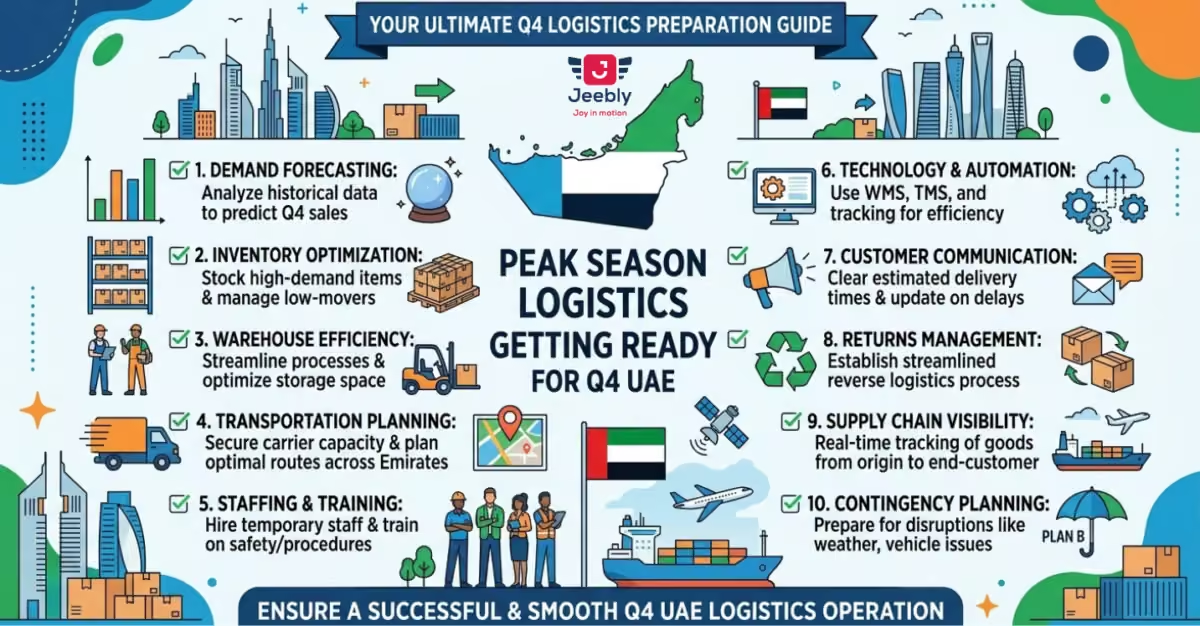
Social media usage spikes during Ramadan, particularly after Iftar. Order volumes for food, fashion, gifts, and personal care increase sharply in the 10 days leading up to Eid. Sellers who pre-arrange fulfilment capacity, build buffer stock for top SKUs, and communicate delivery lead times clearly convert the period.
Those who treat it as a standard month face fulfilment failures at exactly the point when customer acquisition costs are highest, and expectations are elevated.
* Cultural accuracy is a commercial variable.
The UAE’s consumer base is genuinely multicultural, and content that resonates with one segment may not land with another. Ramadan campaigns, National Day references, and category-specific cultural cues all require deliberate thought.
This directly affects engagement, which in turn affects reach, which in turn determines whether content generates orders.
* Platform selection should follow your actual audience.
TikTok’s reach is broad, and its discovery mechanism is unmatched for impulse-driven categories. Instagram’s buyer intent is higher. It suits brands where the visual and established credibility matter.
WhatsApp is where the relationship is maintained, and COD is confirmed. Most UAE social commerce businesses that scale operate across at least two of these, not one.
For social sellers managing delivery across the UAE, the logistics requirements are specific: speed within Dubai, consistent coverage, COD infrastructure capable of handling volume, and integration that eliminates manual order processing.
Jeebly Dash is built for the demand patterns social commerce creates.
* Express delivery within 60 to 120 minutes; same-day delivery available within Dubai.
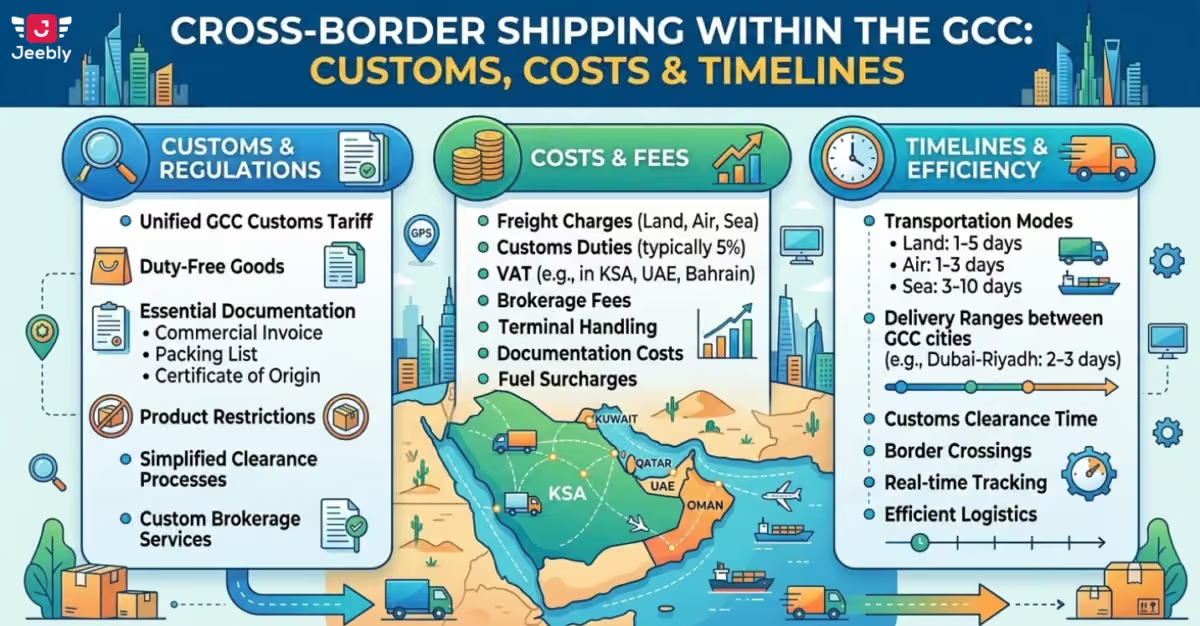
* Next-day delivery runs across all seven emirates at a fixed rate of AED 17.31 for orders up to 5kg.
* COD collection is included in the weekly remittance, and digital proof of delivery is provided for every order.
Jeebly Bizz supports operations that have moved beyond individual order dispatch.
* Warehousing across Dubai, Abu Dhabi, and Sharjah
* Pick, pack, and deliver is managed end-to-end
* Shopify, Magento, WooCommerce, and custom API integrations connect the seller’s store directly to Jeebly’s fulfillment system.
* Orders flow automatically without manual entry.
* Live inventory and order visibility run from a single dashboard.
* Reverse logistics is part of the service.
Additionally, the Jeebly One app is built for the consumer end of social commerce, like individual sellers and buyers who need to book, track, and manage standard parcels on the move.
If you’re shipping above 20kg or need warehousing, that’s Jeebly Bizz territory. For everything else, the app handles it from your phone.
Social commerce in the UAE in 2026 is an operating environment. TikTok, Instagram, and WhatsApp are where UAE consumers discover products, validate decisions, and complete purchases. The commercial infrastructure on these platforms is established. The audiences are there.
What separates businesses that grow from those that plateau is whether their fulfillment operation can support the volume generated by their social presence. Order management, last-mile delivery, COD handling, returns, and inventory visibility: these are where most social commerce businesses hit their ceiling.
Get the logistics infrastructure right before that ceiling arrives.
If you want to understand what the right fulfilment setup looks like for your volume and product category, speak to the Jeebly team.
Platform-native logistics options in the UAE are limited and rarely cover same-day or express delivery. They also don’t handle COD, which remains a primary payment method for UAE buyers, particularly first-time purchasers. A third-party provider gives you emirate-wide coverage, COD collection with structured remittance, reverse logistics, and OMS integration across all your channels simultaneously.
Once you’re managing COD reconciliation manually, handling returns with no process, or missing orders because they’re coming through multiple channels, the cost of staying informal exceeds the cost of a logistics setup. Jeebly’s Self-Service Platform has no minimum order commitment, so the switch doesn’t require a volume threshold.
This is a genuine operational challenge. Structured logistics providers build routing protocols around pin-based location data and have rider communication workflows for ambiguous addresses. Without this, the first-attempt failure rate increases significantly.
Refusal rates for social commerce COD orders run meaningfully higher than for established e-commerce channels. Impulse-driven purchases, particularly those made on TikTok, tend to have higher refusal rates than search-intent purchases. Sellers should factor this into margin calculations and choose a logistics partner who provides SKU-level refusal data.
Yes, provided the logistics partner has temperature-controlled vehicles. Jeebly’s fleet maintains a minimum temperature of 15°C, which meets the controlled room temperature requirements for most cosmetics, wellness products, and ambient food items.
| Cookie | Duration | Description |
|---|---|---|
| cookielawinfo-checkbox-analytics | 11 months | This cookie is set by GDPR Cookie Consent plugin. The cookie is used to store the user consent for the cookies in the category "Analytics". |
| cookielawinfo-checkbox-functional | 11 months | The cookie is set by GDPR cookie consent to record the user consent for the cookies in the category "Functional". |
| cookielawinfo-checkbox-necessary | 11 months | This cookie is set by GDPR Cookie Consent plugin. The cookies is used to store the user consent for the cookies in the category "Necessary". |
| cookielawinfo-checkbox-others | 11 months | This cookie is set by GDPR Cookie Consent plugin. The cookie is used to store the user consent for the cookies in the category "Other. |
| cookielawinfo-checkbox-performance | 11 months | This cookie is set by GDPR Cookie Consent plugin. The cookie is used to store the user consent for the cookies in the category "Performance". |
| viewed_cookie_policy | 11 months | The cookie is set by the GDPR Cookie Consent plugin and is used to store whether or not user has consented to the use of cookies. It does not store any personal data. |